Builder Spotlight
RK Knows: C2 Corvette (1963–1967) — What Split-Window and Big-Block Sting Rays Are Worth Right Now
- By
- RK Motors
- Published
- October 21, 2026
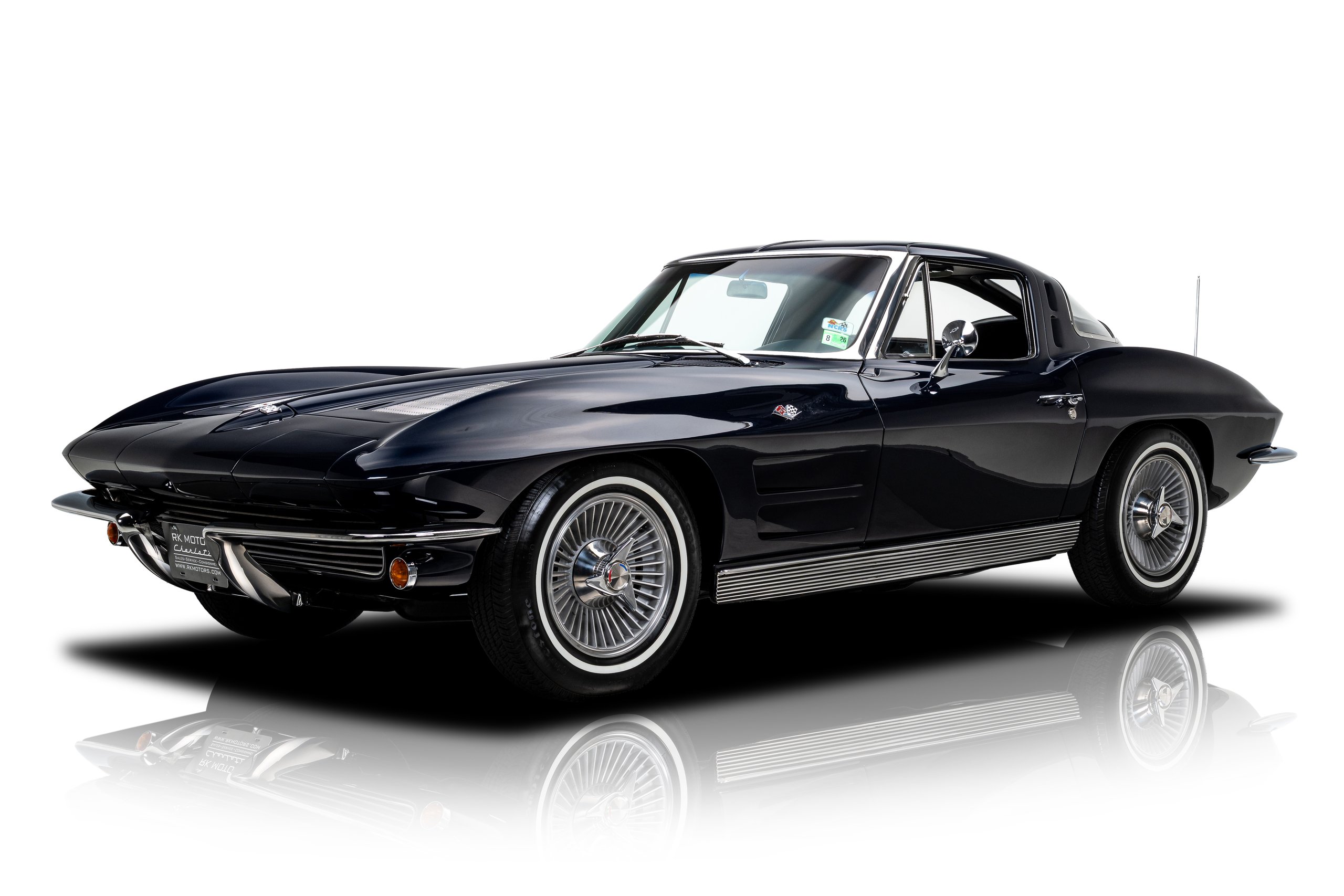
Short answer: right now, a C2 Corvette (1963–1967) is worth anywhere from the high five figures for a driver-quality small-block car to well over $150,000 for a documented 427/435 or fuel-injected example, with 1963 split-window coupes and professionally built restomods regularly trading between roughly $150,000 and $400,000. The single biggest variable isn’t the year. It’s the engine code, and whether the car can prove it still has the one it left St. Louis with.
This guide pulls together two things RK Motors has written about before, The Corvette Ladder and the $70,000 bare split-window shell, and puts them into one reference for the entire mid-year generation, backed by our own sold history and current public market benchmarks.
What RK Motors’ Own Sales Data Shows
RK Motors’ sold archive, which is public on our website, currently lists 217 sold 1963–1967 Corvettes. Broken down by model year:
A few patterns stand out:
- The bookend years dominate. 1966 and 1967 together account for 118 cars, or 54% of every C2 we’ve sold. Those are the big-block years, and 1967 is the final, most-refined version of the body.
- The split-window is a category of its own. 31 of our 47 sold 1963s were split-window coupes. Roughly half (15) were factory-style restorations or survivors; the other 16 were restomods or custom builds.
- Big-blocks drive the factory-correct side. Of roughly 135 factory-style (non-restomod) C2s we’ve sold, about 56, or 41%, were big-block cars (396 or 427). About 25 of those were Tri-Power 427s, and 15 more factory-style cars were fuel-injected “fuelies.”
- Restomods are a steady ~37% of C2 volume. About 80 of our 217 sold C2s were restomods or custom builds. That share has held steady: in our 50 most recent C2 sales it was 36%, and in our 25 most recent it was 44%. Restomods haven’t replaced factory-correct mid-years at RK Motors. They’ve become a permanent second market alongside them.
- Documentation is common at the top. 44 of our factory-style C2 listings cited NCRS, Bloomington Gold, or a combined award (Triple Crown, Triple Diamond, Duntov) in the headline alone, and 23 led with “numbers-matching.”
Methodology note: counts come from RK Motors’ public sold-inventory listings for 1963–1967 Chevrolet Corvettes as of September 2026. “Restomod” and “big-block” classifications are based on each listing’s published drivetrain description.
The C2 Price Ladder: What Each Tier Is Worth Right Now
The mid-year market is best understood as a ladder. Each rung is defined mainly by engine option, body style, and documentation. The benchmarks below are CLASSIC.COM market values by factory engine code as of September 2026; they represent a typical good example, so driver-quality cars will trade below them and judged, documented cars above.
Rung 1: Small-block driver-quality cars
This is the entry point and by far the deepest part of the market. The 300- and 350-horsepower 327s were built in large numbers, and at any given time they make up most of the C2s for sale. Market benchmarks sit in the mid-$80,000s to low-$90,000s, and a genuine driver-quality car with a non-original engine or older restoration will typically sit below that. For buyers who want the Sting Ray shape and the mid-year driving experience without paying for rarity, this is the rung that makes sense.
Rung 2: The 390- and 425-horsepower big-blocks
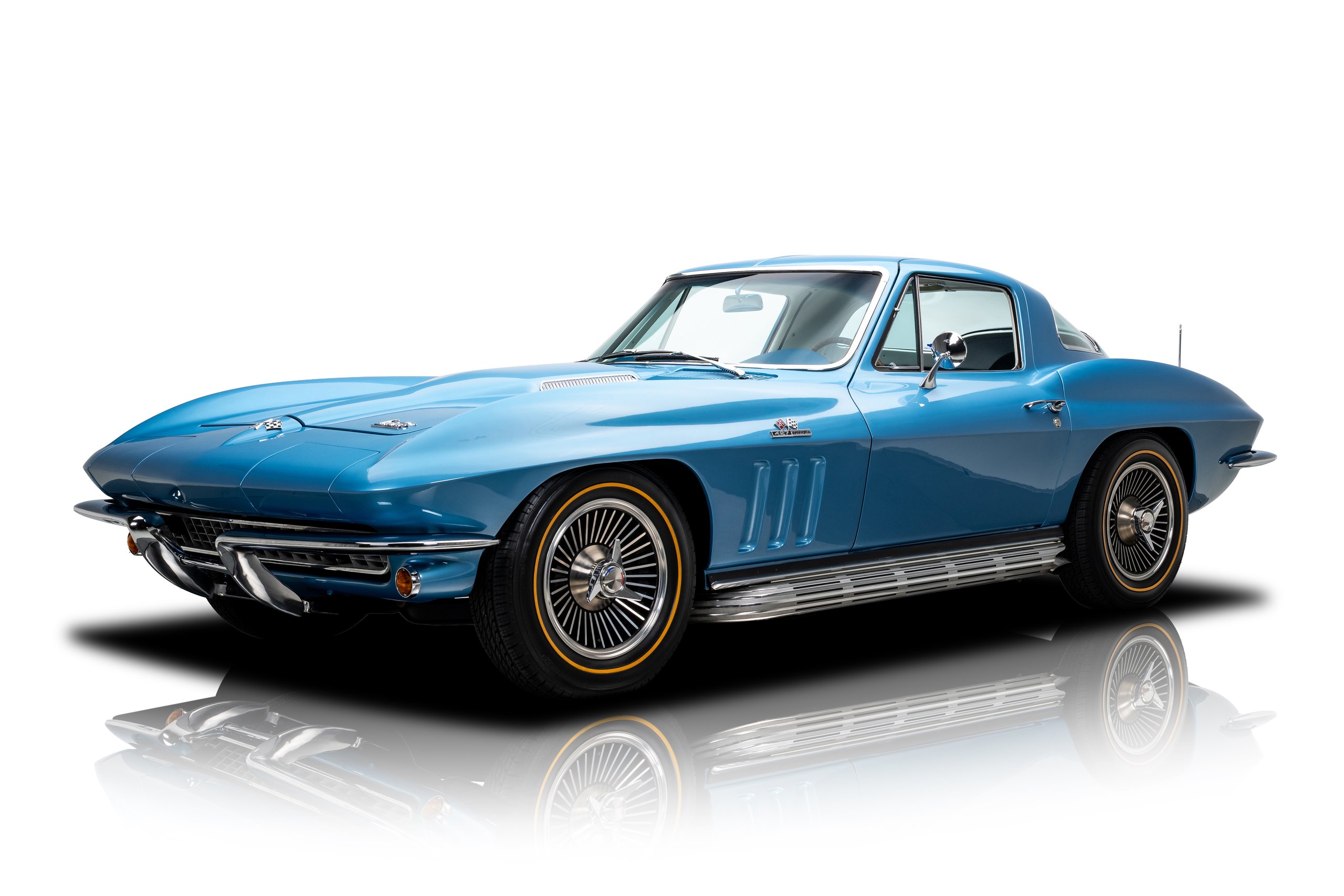
Chevrolet introduced the big-block Corvette in 1965 with the one-year-only 396/425, then moved to the 427 for 1966–1967. The L36 (390 hp) and L72 (425 hp) are the most attainable big-block C2s, currently benchmarking around $114,000–$116,000. Hagerty data cited by industry analysts puts the big-block premium at roughly 57% over a comparable small-block car in excellent condition. The stinger hood on a 1967, or the domed hood of a 1965–1966 big-block, is part of what buyers are paying for, which is also why correct big-block cars are so frequently imitated.
Example from our archive: a numbers-matching 1966 L36 coupe, since sold.
Rung 3: The L76 and L68
The solid-lifter 340-horsepower L76 was the top carbureted small-block in 1963 and 1964, and it’s the engine in the Triple Crown split-window we covered in our shell-sale story. The L68 427/400 was the 1967 Tri-Power option below the L71. Both currently benchmark in the mid-$140,000s to low-$150,000s.
Rung 4: The L71 427/435 and L84 fuelie
These are the engines most collectors picture when they think “valuable mid-year.” The 1967 L71, three two-barrel carburetors on a 427 rated at 435 horsepower, benchmarks near $168,000, and judged, documented examples go well beyond that. Our Triple Diamond 1967 L71 convertible, featured in The Corvette Ladder, is exactly that kind of car and has since sold. The fuel-injected L84 (360 hp in 1963, 375 hp in 1964–1965) benchmarks near $191,000, the highest of the regular-production engines below the race-derived cars.