Builder Spotlight
International Scout Restoration: Why Velocity Builds the Ultimate Scout II Restomod
Velocity re-engineers the International Scout II with modern power, comfort, and capability while preserving its rugged heritage.
- By
- Velocity Restorations
- Published
- October 20, 2026
- Updated
- October 21, 2026
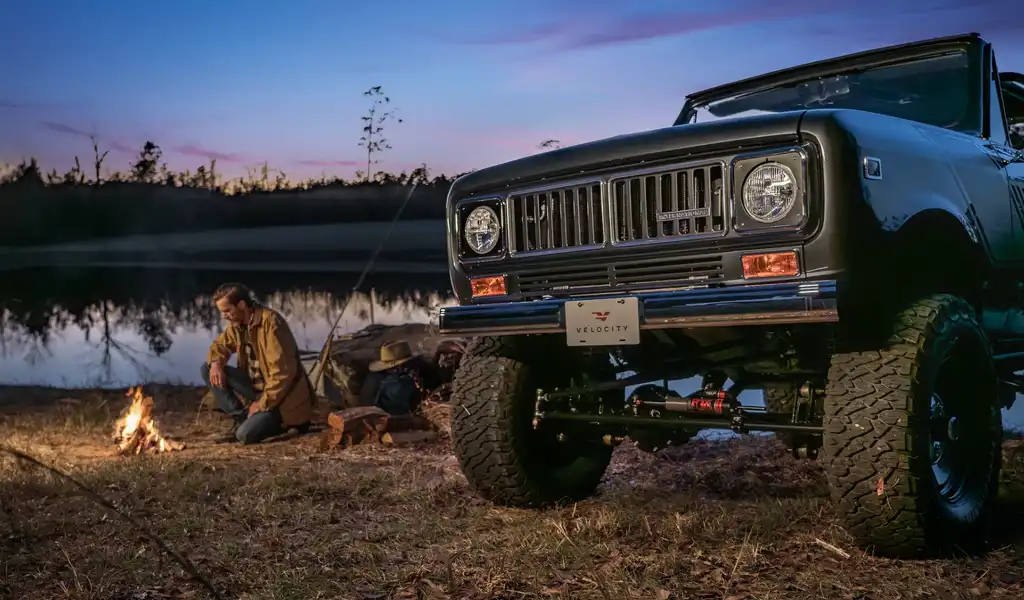
Long before SUVs became suburban family transportation, the International Scout was earning its reputation in places where paved roads simply ended. Built for ranches, forests, construction sites, and backcountry trails, it became one of America's most capable utility vehicles and one of its most enduring automotive icons.
The International Harvester Scout already held mythical status: tougher than the original Ford Bronco, built to compete directly with the war-tested Jeep, the Scout was a rudimentary vehicle that had no place on normal roads. It was designed for hard, four-wheeled labor on farms, in forests, and to hit the rugged trails of an America that was as-yet unexplored by most citizens.
The Scout was gradually improved through the 1960s until the Scout II was introduced in 1971. This is the generation that appeals to International Scout enthusiasts and restomod builders, and fortunately it was produced for almost a decade in decent numbers.
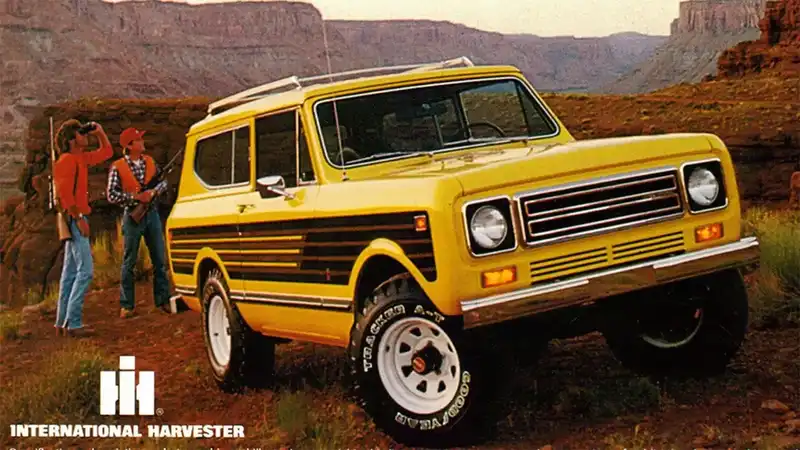
As with any classic, you can obtain a Scout II from this period, but be prepared to contend with all the plusses and minuses of the original. Yes, these vehicles were built to last, and to endure difficult lives. That kept them fairly simple in terms of their engineering.
But they were never intended to be found anyplace but hauling gear from field to field, heading out for fence repair on vast ranches, or having plows attached to move snow. If you have ever driven an unimproved vintage Scout, you know the harsh reality: stiff steering, crude brakes, and a tendency to rust.
Velocity doesn't believe an icon should be left in the past. Our handcrafted Re-Engineered Classics™ preserve everything that made the Scout II memorable while replacing decades-old engineering with modern performance, comfort, and reliability. The result is a vehicle that's just as rewarding to drive today as it is to admire.
Starting from the Ground Up: International Scout Restoration Done Differently
In a traditional restoration shop, a builder will take the original, 50-year-old steel frame, then clean it up and make enough repairs to enable drivability.
The Scout II was built for a different era and a different purpose. It earned its reputation tackling demanding terrain, long before comfort, refinement, and everyday drivability became expectations. Velocity preserves that capability while thoughtfully re-engineering the vehicle for the way it's driven today.
At Velocity, the old frame is swapped out for a fresh one, and the suspension is thoroughly revamped. Combined with improved steering and braking systems, the Scout II can now be driven with confidence on the highway, and it can handle corners with a more relaxed demeanor. The result is a Scout that's as comfortable on the highway as it is on the trail.
And in case you’re wondering, a Velocity International Scout II is still equipped with four-wheel-drive, so offroading is never out of the picture. It’s just that you can still drive your expensive restomod to more civilized places without much worry about arriving feeling beaten up or stressed out.
A Reliable, Modern Engine for Restomod Scout IIs
The Scout II was manufactured with a range of engine options, from modest four-cylinder powerplants to torque-y V8s. Manual and automatic transmissions were available, and the drivetrain could be spec’d for rear- or four-wheel-drive.
Despite the variety, none of these choices are up to par for contemporary drivers. Velocity rectifies that situation by swapping out original motors for the Gen V LT1 engine from GM Performance. This 6.2-liter V8 is a descendant of the legendary LS, which is extremely popular as a restomod motor and a dream for engine swaps.
The fuel-injected engine cranks out 455 horsepower and is mated to a 10-speed automatic transmission that leaves the old three-and four-speed units in the history books. This combination brings 21st-century performance and reliability to the Scout II, transforming the Scout into a vehicle that's just as enjoyable on a weekend road trip as it is on a trail.
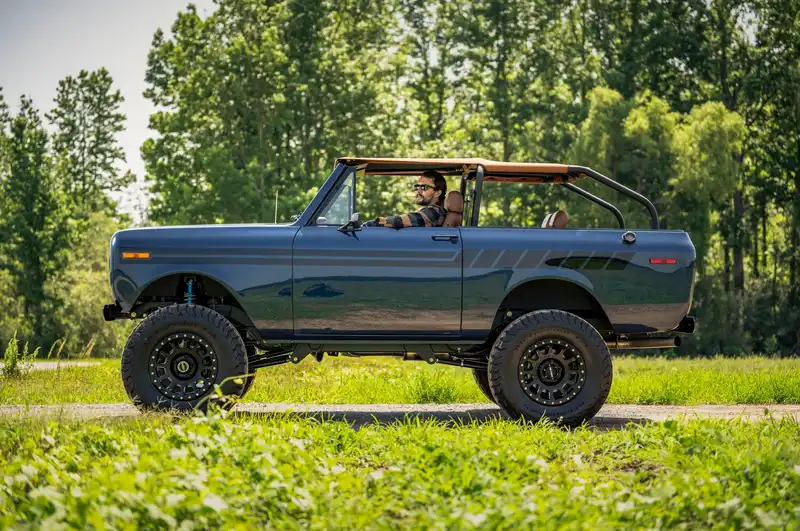
Battling Rust and Corrosion with Today’s Fit and Finish
International Scout II’s are infamous for rust. That’s just reality with these vehicles, which were designed to be tough but also relatively inexpensive. They were destined for hard work in difficult environments and weren’t expected to become collector cars.
But now that they’ve been rediscovered by a new generation of enthusiasts, the rust needs to be dealt with. Velocity tackles the problem by completely stripping the original sheet metal down to bare steel. Then we repair or refabricate damaged areas before giving every re-engineered Scout II a state-of-the-art paint job.
The restored body is intended to last for decades and, with proper care, to maintain a like-new appearance, preserving the value of what is after all a major investment.
Replacing Original Interiors with Luxury Materials and Modern Technology
The Scout II earned its reputation through simplicity and capability, not unnecessary frills. Velocity believes those qualities are worth preserving. That's why every interior is handcrafted to retain the Scout's unmistakable character while seamlessly integrating the comfort, refinement, and technology that make it a pleasure to drive today.
Every handcrafted interior is designed to honor the Scout's heritage while enriching the ownership experience. Carefully selected materials, modern technology, and thoughtful craftsmanship create a cabin that's comfortable enough for long road trips, durable enough for adventure, and unmistakably Scout.
Model
Builders and sellers
Programs
For sale
Related stories
- Velocity’s Guaranteed Christmas Delivery on Available Inventory
- Square Body Trucks: Complete 1973–1987 Chevy & GMC Guide
- Top Gear Reviews the Velocity Ford Mustang Fox Body
- Velocity Restorations vs. Classic Ford Broncos: A Buyer’s Comparison
- 1967–1968 Ford Mustang: Fastback vs. Convertible
- What to Look For Before You Buy a First-Generation Chevrolet K5 Blazer